About Epilepsy Southwestern Ontario
Epilepsy Southwestern Ontario is a registered not-for-profit, charitable agency dedicated to enhancing the lives of people who are affected by epilepsy through support services, education, advocacy, and community awareness.
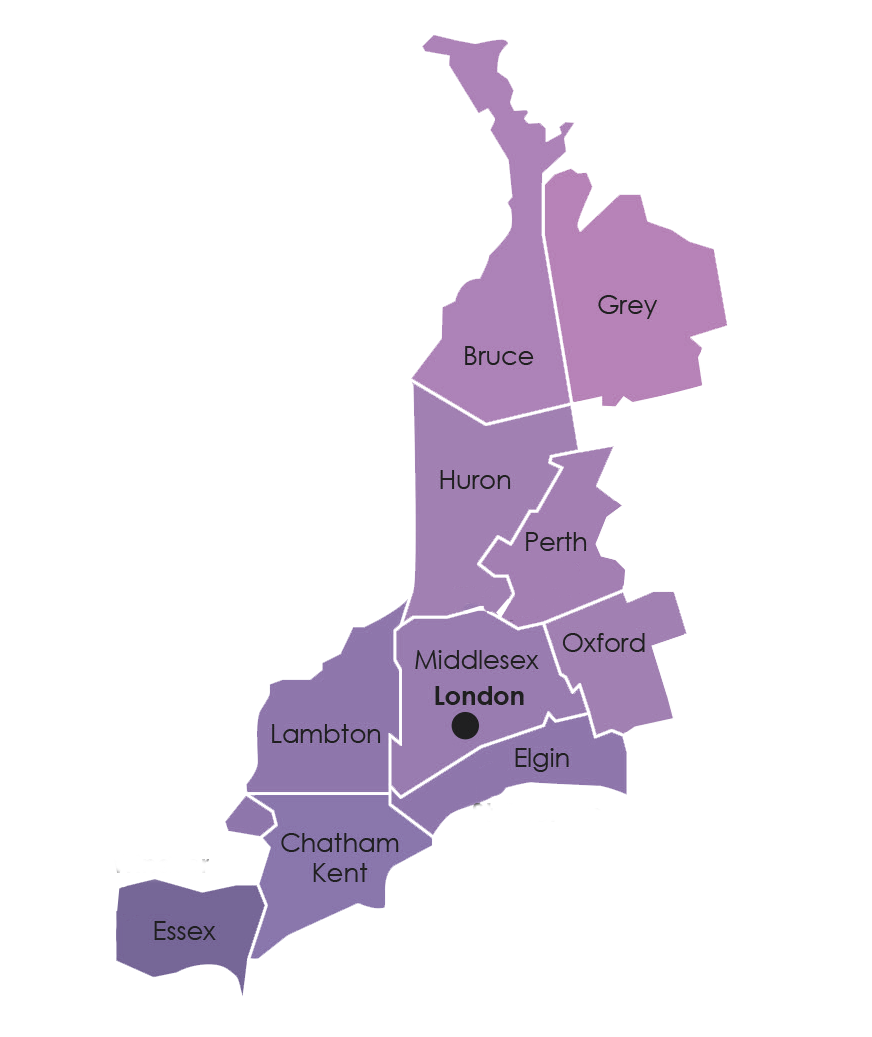
Epilepsy Southwestern Ontario provides a range of services to those affected by epilepsy in Erie-St. Clair and Southwest LHIN region (Huron, Perth, Grey, Bruce, Oxford, Elgin, Thames Valley, Windsor, Essex, Sarnia, Lambton and Chatham-Kent counties).
About 14,000 people in this area have been diagnosed with epilepsy. The effect of an epilepsy diagnosis goes beyond the individual; it impacts the entire family.
Our Story
Since passing our first constitution, Epilepsy Southwestern Ontario (ESWO) has focused on enhancing the lives of people who are affected by epilepsy through providing a network of services that educate, support and build community awareness. ESWO continues to work in partnership with the Epilepsy Programs at London Health Sciences Centre to ensure that the non-medical needs of persons living with epilepsy are identified and supported.
Our Mission
Epilepsy Southwestern Ontario enhances the lives of people who are affected by epilepsy by providing a network of services that educate, support, and build community awareness.
Educate
We educate our communities about epilepsy and seizure first aid.
Raise Awareness
We dispel myths and break down the stigma of epilepsy.
Support
We are there for people with epilepsy and their families.
Land Acknowledgement
We acknowledge and give thanks to the traditional lands of the First Peoples who have cared for what is now known as Southwestern Ontario. We recognize all the territories within this region and acknowledge that these lands are shared with us through the Upper Canada Treaties. We acknowledge the Dish with One Spoon Wampum under which multiple nations agreed to care for the land and its resources by the Great Lakes in peace, and the Two Row Wampum which represents an agreement of peace, friendship, and respect, between First Peoples and settlers.
This land continues to be the home to many First Nation communities whom we recognize as stewards of the land and waters. The communities of the Southwestern region include but are not limited to:
- Aamjiwnaang First Nation
- Aazhoodenaang
- Attiwonderonk (Neutral Nation)
- Bkejwanong (Walpole Island) First Nation
- Caldwell First Nation
- Chippewas of Nawash Unceded First Nation
- Chippewas of Saugeen First Nation
- Chippewas of the Thames First Nation
- Delaware Nation at Moraviantown (Lenape/Lunaapeew)
- Lunaapeewak
- Munsee-Delaware Nation
- Oneida Nation of the Thames
- Kettle and Stony Point First Nation
As co-inhabitants of Turtle Island, we are grateful to carry out our mission to support those affected by epilepsy on this land. As a non-profit organization, we aim to support the Indigenous community through collaborating with Indigenous health partners to reach more affected families and individuals and improve awareness and access to epilepsy-related health education and system navigation services.
We align with Action 92, Business and Reconciliation (Section i), from The Truth and Reconciliation Commission of Canada, as we commit to meaningful consultation and building respectful relationships through collaborative outreach. Additionally, we support Call to Action 19 under Health, as our mission is to help reduce gaps in epilepsy-related health awareness and access, through our programs and services.
We accept responsibility as a non-profit public institution to renew relationships with First Nation, Métis, and Inuit Peoples through reconciliation, community service, and respect. We recognize that this land acknowledgement is only a first step, and we are committed to beginning meaningful consultation with Indigenous communities.
Our Timeline
1966
Elanor McLean, whose child was diagnosed with epilepsy, hosted the first support meeting for London area families living with seizures. The informal group, called “Concerned Parents”, met regularly to discuss their children’s epilepsy. Eventually, stakeholders in the region formed Epilepsy Ontario’s Midwest Chapter, which ran an action group, a parent group and a recreational/social group.
1977
Epilepsy Ontario’s Midwest Chapter opened their first office on London’s Dundas Street in 1977 and the organization hired staff to promote a public education program targeting primary and secondary schools.
1981
The agency took a major step forward in 1983 and passed its first constitution as Epilepsy London & Area, serving London, Middlesex, Elgin, and Oxford counties.
2001
As of 2001, Epilepsy London & Area expanded to include Sarnia Lambton and Chatham Kent. Since the agency began providing services beyond the London area, Epilepsy London & Area was renamed to Epilepsy Support Centre.
2011
As of 2011, Epilepsy London & Area expanded to include Windsor Essex.
Present
We have now become Epilepsy Southwestern Ontario and are growing each and every day!
Volunteer With Us
A Proud Member Of